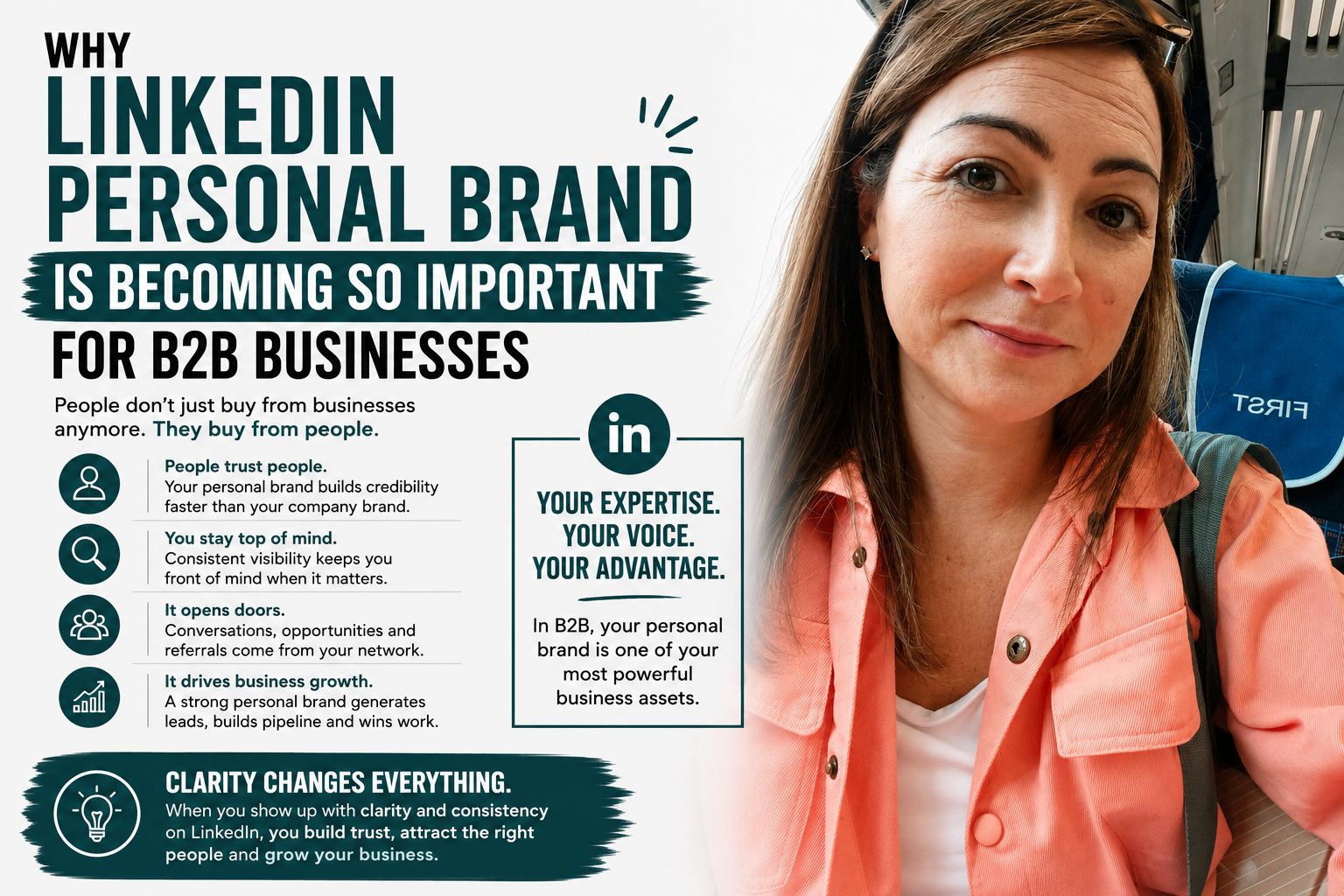
Why is Linkedin personal branding becoming essential?

For years, many business owners and decision makers viewed LinkedIn as little more than an online CV - originally it was the ‘recruiters’ platform where you were hunted out for, or searched for, that perfect job. A place to update your job title, connect with a few people and perhaps post the occasional company update.

But, the way we buy has changed. Buyers are researching differently. Prospects are forming opinions before they even click on your website. Potential employees are evaluating leadership teams before applying for roles. Partners, suppliers and investors are all making judgements based on what they find online.Increasingly, people want to know who is behind the business.And that is exactly why building a personal branding on LinkedIn has become so important. Because visibility builds trust.

People buy from people (no matter how cliche that sounds)

Whether you're running a manufacturing company, engineering business, consultancy, technology firm or professional service, your customers are still making decisions based on trust.

They want confidence that you understand their challenges.They want reassurance that you've solved similar problems before.They want to know your business is credible, experienced and capable.

The challenge is that trust used to be built almost exclusively through face-to-face interactions -  trade shows, networking events, sales meetings and trusty referrals.

Of course, those channels still matter, but they are no longer the only places where trust is formed. 

Trust often begins online, it’s accessible 24/7, we don’t need to be in the office (or on office hours) to research.

So it’s very likely that before a prospect has even booked a meeting, they may have visited your website, looked at your LinkedIn profile, viewed your content and researched your company.

In many cases, they have already formed an opinion before you even know they exist.

Your buyers are watching before they enquire

One of the biggest misconceptions about LinkedIn is that nobody is really bothered about what is said.

Heads of businesses often tell us, ‘my customers aren't on LinkedIn’ or ‘I don't have anything interesting to say’.

The reality is very different.

Many decision-makers rarely post
Many never comment.
Most don't engage publicly at all.

But they are reading.

They're consuming content.
They're researching suppliers.
They're checking profiles.

They're also assessing who appears knowledgeable, credible and trustworthy.

This is particularly important for those industries with longer sales cycles.

In manufacturing, engineering and technical sectors, buyers often spend weeks or months researching potential suppliers before making contact.

If your competitors are consistently appearing in their feed while your business remains invisible, who do you think they'll remember when the time comes to have a conversation?

You have more content than you think

One of the biggest barriers to personal branding is the belief that you need endless content ideas. Most business owners assume they have nothing worth talking about but the opposite is usually true.

I advise clients to think about the conversations you’re having every week, the questions customers ask, problems that your team solve, industry news, lessons learnt in your career, the wins, the losses…there’s heaps of content opportunities just living  in your head. 

What feels obvious, or disinteresting, to you is often incredibly useful to someone else. People want opinions, insights, experiences…they want a story. The expertise you've developed over years in your industry is exactly what potential customers want to learn from.

Consistent will always beat perfect

Many people approach LinkedIn with an all-or-nothing mindset, and I’ve been guilty of it myself.

Posting every single day for two weeks, get busy, then disappear into the sunset only to come back and start again - repeating over and over.

Because my clients always come first, so their work is prioritised. But when does that get detrimental to growing our own businesses? It’s the same with you and your clients. That visibility (or invisibility in my hiatuses) starts to compound over time.

Rarely is anything built - or sold - in one post but it is built through consistently being seen. Show up regularly.Share useful insights.Demonstrate expertise.

Continue to be seen long after everyone else has stopped or gone on their cyclical break, only to pop up 3 months later!

Personal branding supports more than sales

Many think that LinkedIn personal branding is only about generating enquiries. Whilst it does of course support business development, the benefits often extend further.

A strong personal brand can help:
- Attract better talent
- Support recruitment efforts
- Strengthen customer relationships
- Increase referral opportunities
- Open speaking opportunities
- Create partnership conversations
- Improve credibility during sales processes
- Position your business as an industry authority

In many cases, prospects arrive at sales conversations already familiar with your business because they've been following your content for months.

That means instead of starting from zero, you're building on existing trust.

The goal isn't more followers

The goal isn't becoming famous or collecting likes. It’s much simpler. 

By building a personal brand you want to become known for what you want to be known for.

To stay visible to the people who matter, to build trust before conversations begin and to create a digital presence that reflects the expertise you've spent years developing.

Because whether you like it or not, people are researching, comparing and evaluating.

If you think about your current profile set up, will viewers find a visible, credible expert or an empty profile that tells them very little and leaves them no option but to scroll by?

Your personal brand is no longer separate from your business brand, for many of your ideal prospects it is your business brand.

People want to know who they're buying from, who they're partnering with and who they're trusting with their investment.

LinkedIn gives business owners and senior decision makers an opportunity to build that trust at scale by consistently sharing valuable insights, expertise and experience.

The businesses that understand this are building relationships long before enquiries arrive, and in increasingly competitive markets, that consistent visibility can become one of the most valuable assets your business owns.
Our 'done for you' Linkedin package helps founders, directors and industry experts turn their knowledge into consistent visibility, authority and trust - without spending hours creating content themselves. You can book a conversation to find out more here.

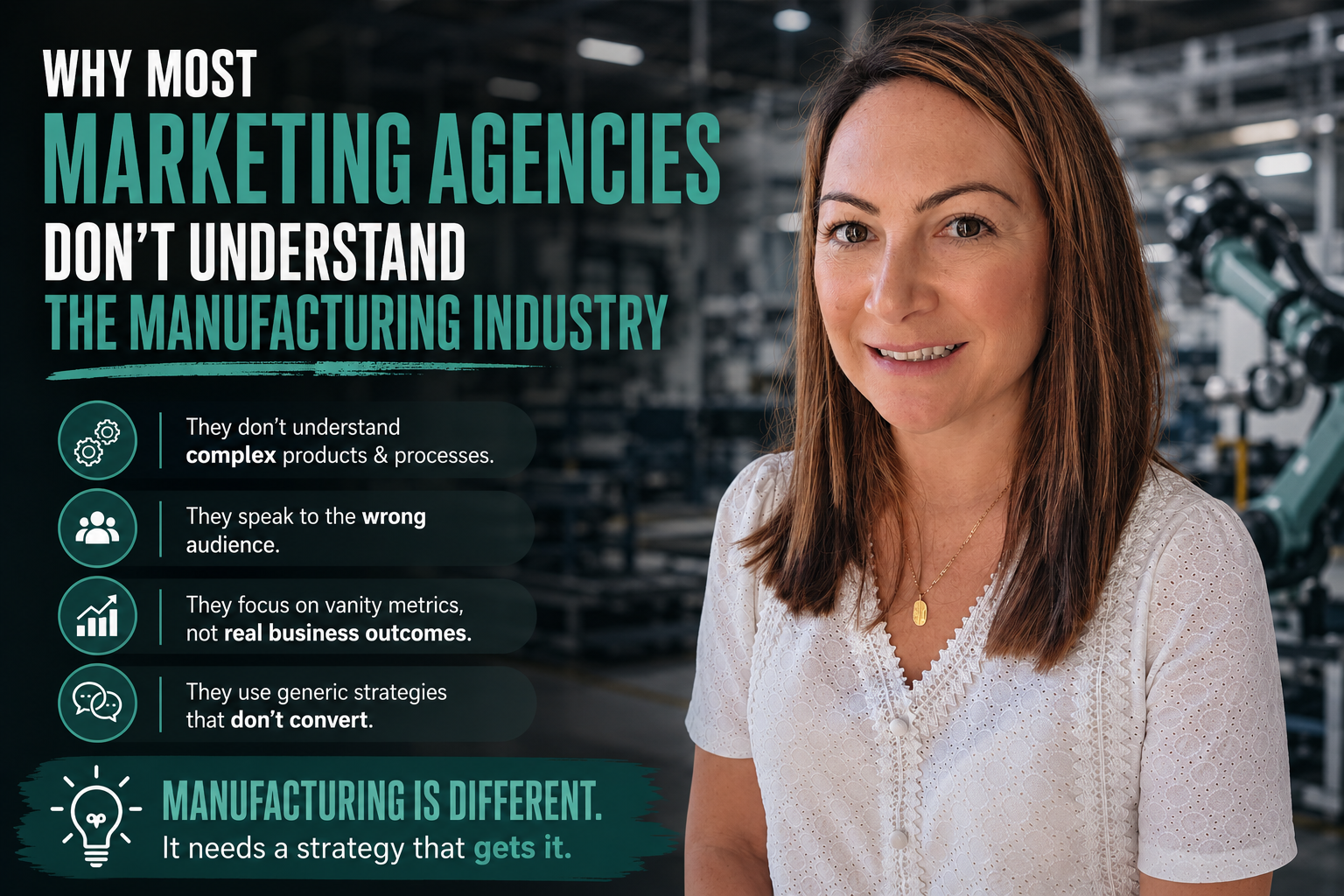
Most marketing agencies don’t understand manufacturing – here’s why

One of the biggest concerns we hear from manufacturing and engineering businesses is “What if the agency doesn’t understand our industry?” It’s a fair concern.
Because manufacturing is different. You are not selling fast fashion, protein shakes or the latest trendy consumer app.

You're often selling:
- Highly technical products
- Long sales cycle solutions
- Complex products or services
- Specialist processes

Your customers aren't making emotional impulse purchases at 11pm from their sofa. They're making considered commercial decisions that could affect production lines, downtime, quality control, profitability and customer relationships. That changes how marketing needs to work.

One of the big reasons we see with many agencies is that they struggle to effectively market these weighty B2B 'boring' businesses and so they apply consumer-style marketing approaches and to technical industries.

Buyers from the manufacturing world are usually looking for something different. Your ideal client typically wants to understand:

- Why something matters
- How it works
- What problem it solves for them
- What impact it has on them operationally
- Whether they can trust you to provide + deliver it

That requires a completely different type of communication.

Another issue we see is that some marketing agencies become scared of the technicalities and assume the subject matter is 'too complicated' for marketing - so they over-simplify everything into vague corporate messaging. The result is often content that sounds polished but says very little.

Manufacturing businesses end up with websites and social channels filled with phrases like 'innovative solutions', 'industry-leading technology' and 'quality-driven service' but what does that all mean, and is it explaining anything of any value to your customers, or potential customers? No.

Your buyers are intelligent. In the majority of cases, they are engineers, production managers, operations leaders or technical specialists themselves. Often you'll find the people who make the decisions or sign off the bills are of that industry, they're engineers, they're techy - they can spot generic marketing instantly.

In manufacturing, context really matters.

You can't create effective messaging if you don't understand the production pressures, downtime risks, lead times + operational bottlenecks, quality concerns and the impact of failure.

Because often, the product itself is only one part of the story and the real value is actually:
- Reducing waste
- Improving efficiency + running time
* Improving consistent output
- Reducing operator intervention
- Protecting output quality

That's the type of language buyers in the manufacturing space resonate with.

A lot of agencies approach clients with a mindset of how do we sell this? but the better question to ask would be why does this matter to the customer? - there is a simple, but big, difference.

When you get under the skin of manufacturing businesses and their customers properly, the messaging becomes more useful, more practical and far more commercially relevant and you start building trust through that language.

I'd say that's particularly important in this sector as buying decisions are slower and relationships matter heavily.

In 2022, I founded Clarify with a specific aim to help manufacturing and engineering businesses be consistently marketed, from my lived experiences.

I started my B2B marketing career many years ago as Marketing Manager at Edale, the UK based OEM - and since then (almost 15 years ago - time flies!) I've continued to work within the print manufacturing industry with a number of businesses at varying levels. 

We have worked in-house with technical teams and we're familiar with their world; we've sat around tables and presented to engineers, production managers, technical specialists and operational teams - all of whom require substance over gimmicks. We understand that marketing in these industries is about making the complex feel understandable and commercially relevant.

Once businesses see that we 'get it', the conversations become easier, more collaborative and more focused - and that is often the difference between a generic marketing agency and a genuine strategic partner.

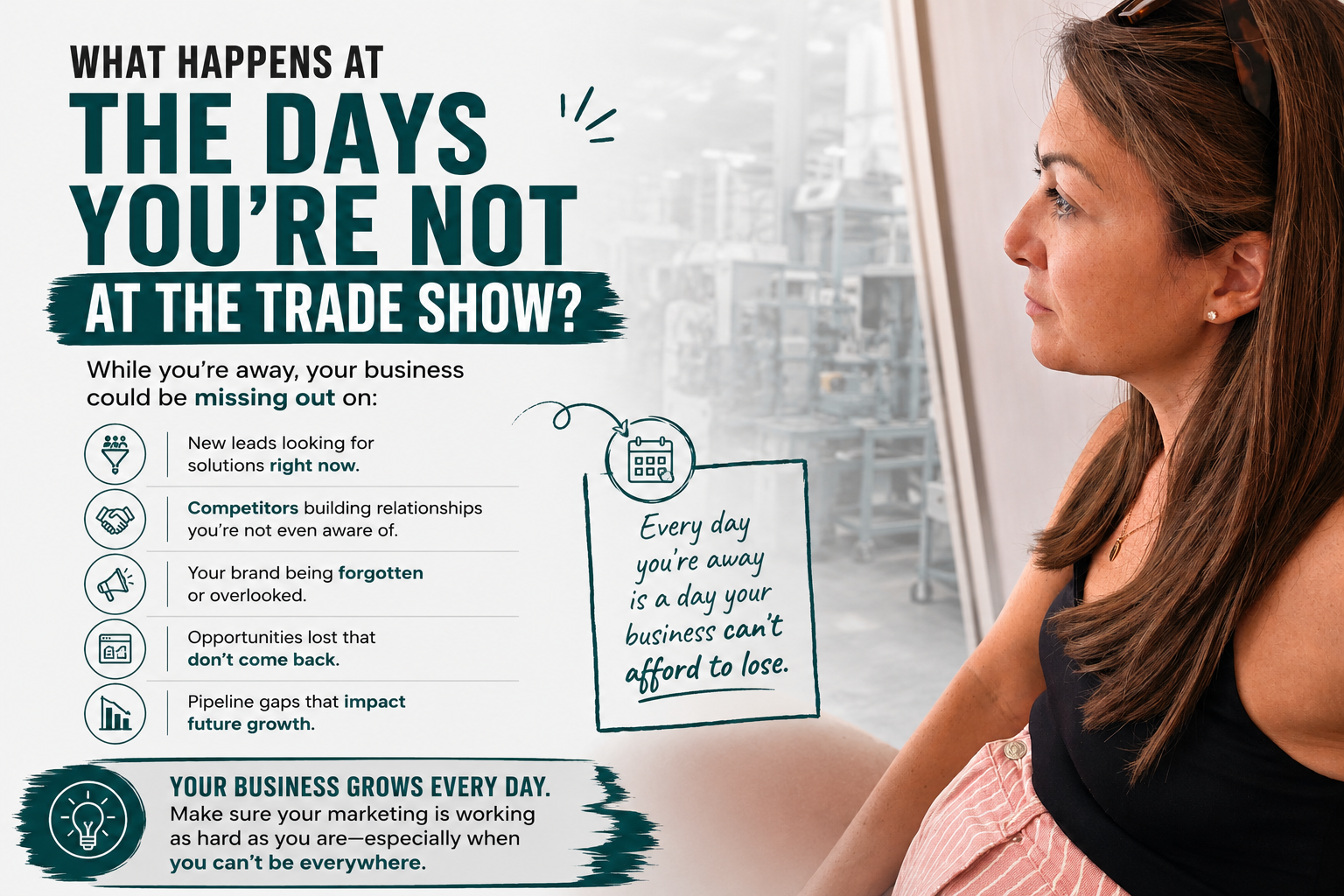
Why tradeshows alone are no longer enough for manufacturing + engineering businesses

For decades, trade shows have been one of the most effective marketing channels available to manufacturing businesses.

In many sectors, they still are.

Walk around any major industry exhibition and you'll find decision makers, engineers, buyers, technical specialists and business owners all gathered under one roof. Deals are discussed. Relationships are built. New products are launched. Existing customers are strengthened.

For many manufacturing companies, trade shows have generated opportunities for years.

The problem isn't that trade shows no longer work.

The problem is when they become the entire marketing strategy.

Because while trade shows remain valuable, the way buyers discover suppliers, research solutions and shortlist vendors has changed dramatically.

And businesses that fail to recognise that shift are putting themselves at risk.

Trade shows still matter

Let's be clear - this post isn't about saying trade shows are dead. Far from it.

In some industries and regions, trade shows remain one of the most important routes to market.

Many manufacturing businesses still rely heavily on face-to-face relationships. Buyers want to see equipment, meet suppliers, ask technical questions and build confidence before making significant investment decisions.

The issue isn't attending trade shows.The issue is relying on them exclusively.

the buyer journey has changed

One of the biggest shifts in the manufacturing sector over the last decade isn't the products being sold. It's the way buyers buy.

Research suggests many B2B buyers are completing a significant portion of their research before they ever even speak to a supplier.

By the time they make contact, they've often already compared options, reviewed websites, consumed technical content and formed initial opinions about potential suppliers they'd like to shortlist - or work with.

If that research is correct, then your exhibition stand is no longer the first interaction a prospect has with your business - it may simply be the point where an existing impression is confirmed, or even challenged.

That's why visibility before, during and after an event matters far more than it ever used to.

Buyers no longer start their journey at the expo

Historically, a trade show might have been the first time a prospect encountered your company. Today, that is often no longer the case.

Many buyers begin researching suppliers long before they attend an event.

They are:
- Searching Google
- Reading technical content
- Browsing supplier websites + comparing you to competitors
- Watching videos
- Following industry discussions
- Reading case studies

So, by the time they walk onto a trade show floor, they likely already have a shortlist in mind. They already know which companies they want to make a beeline to visit. They're not wandering aimlessly waiting for you to 'lure' them onto your stand.

The expo is no longer the start of the buying journey, it's just one touchpoint within it.

WHAT HAPPENS AFTER THE SHOW?

Many manufacturing businesses invest significant time and budget into exhibitions.

- The stand looks great.
- The team is there.
- Great conversations happen.
- Business cards are taken and given.
....then everyone goes back to normal.

That's often where the marketing stops.

We still see businesses whose annual marketing plan looks something like this:

- Attend three exhibitions
- Update stand graphics
- Print new brochures
- Send one email afterwards

The problem isn't the exhibition itself - it's the very little that happens during the other 350 days of the year.

Meanwhile, competitors are continuing to educate the market, share expertise, publish content, nurture prospects and build their visibility.

The exhibition created the opportunity -but the follow-up determines whether it turns into revenue.

are you putting all your budget into one channel?

Many businesses spend a substantial percentage of their annual marketing budget on these exhibitions.

Stand space. Logistics for machinery. Staff travel + accommodation. Graphics. Promo items. Customer entertainment.

The investment can be significant and if the event performs well, the return can be excellent.

But concentrating so much activity into a single event can create risk.

What happens if visitor numbers are lower than expected? Key prospects don't attend? Your competitors dominate the conversation? Economic uncertainty reduces attendance?

When the majority of your marketing investment sits within a handful of annual events, performance becomes heavily dependent on factors outside your control.

MORE THAN A SINGLE CONVERSATION

Manufacturing sales cycles are rarely quick. Most buying decisions involve multiple stakeholders.

One conversation at a trade show rarely closes a deal. What often happens is a prospect visits your stand; they have a positive conversation, they take a brochure and a business card and a promise to get in touch...then they return to work.

And that's where many marketing strategies end.

The companies generating the strongest results are the ones that continue the conversation after the event.

They support prospects with:
- Technical content
- Case studies
- Email nurture
- LinkedIn content
- Website resources

WHY DEMAND CAPTURE IS ESSENTIAL

A lot of businesses hear the phrase 'digital marketing' and immediately think social media.

But this isn't about posting more content, it's making sure interested buyers have somewhere to go next.

When somebody visits your stand, they may not be ready to buy immediately.

The strongest businesses create systems that capture and nurture demand long after the exhibition has finished.

That's where websites, LinkedIn, email nurture and technical content play such an important role.

They're not replacing trade shows, they're supporting them to go beyond the exhibition days.

tHE RISE OF HYBRID

One of the biggest shifts in manufacturing marketing is that buyer journeys are now more hybrid.

People move between online and offline channels constantly.

A prospect might discover you through LinkedIn, head to your website, read a case study or two, meet you at a trade show, download a guide, reach out to sales, visit your website again and then request a meeting or quote.

Trying to isolate a single channel as the source of success misses the bigger picture - the strongest marketing systems combine multiple touchpoints that work together.

Trade shows are still part of that journey but they're no longer the entire journey.

WHAT SHOULD MANUFACTURING BUSINESSES DO INSTEAD?

The answer isn't to replace trade shows, it's to make them work harder.

Before the event:
- Build awareness online
- Promote attendance
- Book meetings in advance
- Share educational content

During the event:
- Capture conversations properly
- Gather meaningful contact information
- Create content from the exhibition

After the event:
- Follow up consistently
- Share relevant resources
- Nurture prospects through email
- Stay visible through LinkedIn and digital channels

When trade shows are integrated into a wider marketing system, their value increases significantly.

ONE STEP IN THE JOURNEY

The most successful businesses aren't abandoning trade shows, they're selectively picking where the best ones will work for them - and their clients, and making them part of a wider system.

They use exhibitions to strengthen relationships, demonstrate products and have valuable face-to-face conversations.

But they also recognise that buyers are researching suppliers on websites, LinkedIn and technical publications long before they speak to sales.

The result is a marketing approach that combines brand visibility, technical credibility, demand generation, sales enablement and relationship building as a joined up approach - rather than relying on a single event to carry the entire year's marketing performance.

Trade shows still work and for many manufacturing businesses, they will remain one of the most valuable marketing investments available, but you need to be aware that buyer behaviour has changed.

Customers no longer rely solely on exhibitions to discover suppliers, compare solutions or build confidence.

The risk is not attending trade shows, but it is assuming that trade shows alone are enough. Companies seeing the strongest growth today are not choosing between one or the other, they're combining marketing activity - online and offline.

The companies that remain visible between events are often the companies buyers remember when it's finally time to make a decision.